Thursday, 2 April 2015

Tuesday, 24 March 2015
LEATHERBACK SEA TURTLE
Kingdom: Animalia

Class: Reptilia
Order: Testudines Family: Dermochelyidae
Species: D.coriacea
The leatherback sea turtle, also called the lute turtle or leathery turtle is the only living species in the genus Dermochelys. It can easily be differentiated from other modern sea turtles by its lack of a bony shell.
 Leatherbacks
are the largest of all
living turtles and is the fourth-heaviest modern reptile behind three crocodilians. They grow
up to seven feet (two meters) long and exceed 2,000 pounds (900 kilograms).
Leatherbacks
are the largest of all
living turtles and is the fourth-heaviest modern reptile behind three crocodilians. They grow
up to seven feet (two meters) long and exceed 2,000 pounds (900 kilograms).
Leatherbacks
have the widest global distribution of all reptile species, and possibly of any
vertebrate. They can be found in the tropic and temperate waters of the
Atlantic, Pacific, and Indian Oceans, as well as the Mediterranean Sea. Adult
leatherbacks also traverse as far north as Canada and Norway and as far south
as New Zealand and South America.
These
reptilian relics are the only remaining representatives of a family of turtles
that traces its evolutionary roots back more than 100 million years. Once
prevalent in every ocean except the Arctic and Antarctic, the leatherback
population is rapidly declining in many parts of the world.

Leatherback sea
turtles are declining due to habitat fragmentation, caught accidentally by
fishing nets. Due to their large
consumption of jellyfish, they are susceptible to swallow plastic bags, which
can kill them.
Wednesday, 18 March 2015
RED PANDA
Red Panda
 Kingdom : Animalia


Class : Mammalia
Order : Carnivora
Family : Ailuride
Species : A. fulgens
Red Panda also called as Lesser Panda and Red cat bear lives in the temperate climates , mostly along the Himalayan region which includes foothills of Nepal, Bhutan, Myanmar and in India it is found in the Northeastern states such as Arunachal pradesh, Sikkim, West bengal and Meghalaya with majority of the population found in Arunachal pradesh. About 50% of Red pandas are found in eastern Himalayas. Most of the Red pandas are found in china.
Red pandas usually grow to the size of an house cat. The total length of Red Panda measures between 80 cm to 115 cm (Head and body length is 50 to 65 cm and length of the tail measure between 30 to 50 cm). The weight of the Red Panda measures between 3.3 to 6.6 kilograms. The body of Red Panda is marked with red and white markings which helps to blend in with the environment the live(mostly red mosses and white lichens). Red pandas use their long, bushy tails for balance and cover themselves during winter
Red pandas eat bamboos, acorns, fruits, eggs and small mammals. Red Pandas are mostly herbivores but occasionally they like to surprise small mammals and birds by adding them to their diet.
Red pandas are declining due to habitat fragmentation*, deforestation(for agriculture development and timber extraction), livestock grazing in wildlife sanctuaries and national parks which results in loss of nesting trees and bamboos on which the Red Pandas feed. Red Pandas are also poached for their pelt from which fancy hats and dresses are produced (Bushy tails are used for decoration on cats and dresses).
*Habitat fragmentation: Emergence of discontinuities (fragmentation) or change in an organisms preferred environment due to geological process that slowly alter the layout of the physical environment.
Tuesday, 10 March 2015
HIMALAYAN WOLF
HIMALAYAN WOLF

Kingdom: Animalia
Class: Mammalia
Order: Carnivora
Family: Candae
Species: C. himalayensis
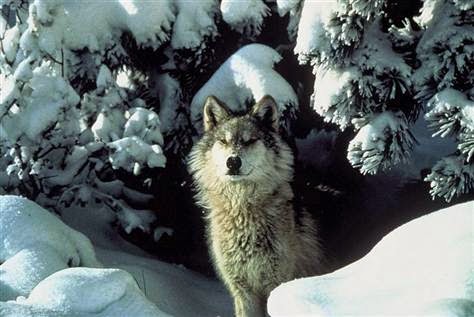
The Himalayan Wolf is a kind of wolf that belongs to the species Canis himalayensis. It is usually found in northern India, in Himachal Pradesh, Indian Kashmir and also in the eastern part of Nepal in the Himalayas.
Himalayan Wolves are smaller in number,so they tend to have smaller packs. Each Himalayan Wolf pack may only have six or eight members.
Himalayan Wolfs are carnivorous and the wolfs mainly feed in small rodents and rabbits.
The Himalayan wolf is listed as an endangered species in certain areas of Jammu and Kashmir, Himachal Pradesh, and Uttarakhand. A large portion of the wolf population in these areas exists outside of the protected area network.
There are around 350 Himalayan Wolfs left in the wild and 21 are in the zoo's in various parts of India.
The Himalayan wolfs are mainly hunted for their flesh. The wolfs flesh are consumed by the humans.
Wednesday, 4 March 2015
Hawksbill Sea Turtle
Hawksbill sea turtle

Kingdom: Animalia
Class : Reptilia
Family: Cheloniidae
Hawksbill sea turtle has narrow narrow head and hawk like beak. It is one of the critically endangered species. The hawksbill's appearance is similar to that of other marine turtles. In general it has a flattened body shape, a protective carapace, and flipper-like arms, adapted for swimming in the open ocean.
Hawksbill sea turtles are typically found around coastal reefs, rocky areas, estuaries and lagoons.
Several characteristics of the hawksbill sea turtle distinguish it from other sea turtle species. Its elongated, tapered head ends in a beak-like mouth (from which its common name is derived), and its beak is more sharply pronounced and hooked than others. The hawksbill's arms have two visible claws on each flipper.
Throughout the world, hawksbill sea turtles are taken by humans, though it is illegal to hunt them in many countries.In some parts of the world, hawksbill sea turtles are eaten as a delicacy.
These turtles have been harvested for their beautiful shell.
Thursday, 11 December 2014
Ganges Shark
Ganges
shark
The Ganges shark (Glyphis gangeticus) is a critically
endangered species of requiem shark found in the Ganges River and the Brahmaputra River of India.
The Ganges shark, as its name suggests, is largely restricted
to the rivers of eastern and northeastern India, particularly the Hooghly River of West Bengal, and the Ganges, Brahmaputra, and Mahanadi in Bihar, Assam, and Odisha, respectively.
River sharks are thought to be particularly vulnerable to
habitat changes. The Ganges shark is restricted to a very narrow band of
habitat that is heavily impacted by human activity.
Overfishing, habitat degradation from pollution, increasing river use and management, including
construction of dams and barrages are the principle threats.
Thought to be consumed locally for its meat, the Ganges shark
is caught by gillnet and its oil, along with that of the South Asian river
dolphin, is highly sought after as a fish attractant
Knife Tooth Saw Fish
Knife tooth saw fish
 The knifetooth sawfish (Anoxypristis cuspidata),is also known as the pointed sawfish or narrow sawfish
The knifetooth sawfish grows to a maximum length of about 4.7
metres (15 ft). Its body is generally shark-like but its most obvious
feature is the flattened head which is extended forward in a blade-like bony
snout 25 pairs of sideways-facing teeth.
The knifetooth sawfish is distributed across a broad swathe
of the Indo-Pacific Ocean. It is present in the waters off Iran, India, Sri
Lanka, Bangladesh, Malaysia, Burma, Indonesia and Papua New Guinea
The knifetooth sawfish feeds on small fish, squid and
invertebrates such as crabs and shrimps.
It is itself prey to various sharks such as
the hammerhead shark (Sphyrna spp.),
the bull shark (Carcharhinus leucas) and the copper shark.
Pregnant females and juvenile knifetooth sawfish are
particularly susceptible to entrapment in fishing gear and this is the major
threat faced by this fish.
Overfishing and
habitat degradation through urbanisation of the coastline also put this species
at risk and the population trend is downward.
For these reasons, the IUCN have listed this fish as "Endangered" in its Red List of
Threatened Species
Bugun Liocichla
Bugun
liocichla
 The Bugun liocichla (Liocichla bugunorum) is a passerine bird species from the Leiothrichidae family closely related to the Emei
Shan liocichla. First spotted in 1995 in Arunachal Pradesh, India, it was described as a new species in 2006 by Ramana Athreya.
The Bugun liocichla (Liocichla bugunorum) is a passerine bird species from the Leiothrichidae family closely related to the Emei
Shan liocichla. First spotted in 1995 in Arunachal Pradesh, India, it was described as a new species in 2006 by Ramana Athreya.
The Bugun liocichla is a small babbler (22 cm (8.7 in)) with
olive-grey plumage and a black cap. The face is marked with prominent
orange-yellow lores, and the wings have yellow, red and white patches.
All sightings of the species have been at an altitude of 2,000 m
(6,600 ft) on disturbed hillsides covered with shrubs and small trees,
with the exception of one sighting on the edge of primary forest.
For a "spectacular bird" with distinctive calls to have been
overlooked until 1995 suggests that the species is not common. Only three
breeding pairs are currently known and is listed as critically endangered.
While the species is capable of living in degraded forests, its small
population is considered threatened, especially in the light of plans to build
a highway through an area thought to be its primary habitat
Sociable Lapwing
Sociable
Lapwing
 The sociable lapwing or sociable plover (Vanellus
gregarius) is a critically endangered wader in the lapwing family
of birds.
The sociable lapwing or sociable plover (Vanellus
gregarius) is a critically endangered wader in the lapwing family
of birds.
In 2004 BirdLife
International categorised this bird
as critically endangered, due to a very rapid population decline for poorly
understood reasons.
The main decline took place between 1960 and 1987, when the known
population halved; it is some 20-25% of the 1930s population levels (BirdLife
International 2006).
The current population was estimated to be between 600 and 1,800 mature
birds in 2006 (BirdLife International), but is being revised to the upward end
of that scale, possibly more, following the discovery of the species'
previously unknown main wintering grounds in Syria, where 1500 birds of all ages were encountered
Red Headed Vulture
Red-headed
Vulture
 The red-headed vulture (Sarcogyps calvus) is also
known as the Asian king vulture, Indian black vulture or Pondicherry vulture (though there are unrelated species in the New World which share the names king vulture and black vulture).
The red-headed vulture (Sarcogyps calvus) is also
known as the Asian king vulture, Indian black vulture or Pondicherry vulture (though there are unrelated species in the New World which share the names king vulture and black vulture).
It is mainly found
in the Indian
Subcontinent, with small disjunct populations in some parts of Southeast Asia
Its a medium-sized vulture of 76 to 86 cm (30 to 34 in) in
length, weighing 3.5–6.3 kg (7.7–13.9 lb) and having a wingspan of about 1.99–2.6 m (6.5–8.5 ft).
The sexes differ in colour of the
iris: males have a paler, whitish iris, whilst in females it is dark brown.
This gaudy-faced vulture was historically abundant, range widely across the Indian
Subcontinent, and also eastwards to south-central and south-eastern Asia, extending from India to Singapore.
The red-headed vulture used to be declining, but only slowly; in 2004
the species was uplisted to Near Threatened from Least Concern by the IUCN.
Pink Headed Duck
Pink-headed
Duck
 The pink-headed duck (Rhodonessa caryophyllacea) is
(or was) a large diving duck that was once found in parts of the Gangetic plains of India,
Bangladesh and in the riverine swamps of Myanmar but feared extinct since the
1950s.
The pink-headed duck (Rhodonessa caryophyllacea) is
(or was) a large diving duck that was once found in parts of the Gangetic plains of India,
Bangladesh and in the riverine swamps of Myanmar but feared extinct since the
1950s.
The male pink-headed duck is unmistakable when a good view is had. Both
sexes are 41–43 cm and long-billed with long necks and peaked heads.
The stronghold of the species was north of the Ganges and west of the
Brahmaputra, mainly in Maldah, Purnea, Madhubani and Purulia districts of
present day Bihar.
The reason for its disappearance was probably habitat destruction.
It is
not known why it was always considered rare, but the rarity is believed to be
genuine (and not an artefact of insufficient fieldwork) as its erstwhile
habitat was frequently scoured by hunters in Colonial times.
Jerdon's Courser
Jerdon's
Courser
The Jerdon's courser (Rhinoptilus bitorquatus) is a
nocturnal bird belonging to the pratincole and courser family Glareolidae endemic to India.
 This courser is a restricted-range
endemic found locally in India in the Eastern Ghats of Andhra Pradesh. It is currently
known only from the Sri Lankamalleshwara Sanctuary, where it inhabits sparse scrub forestwith patches of bare ground.
This courser is a restricted-range
endemic found locally in India in the Eastern Ghats of Andhra Pradesh. It is currently
known only from the Sri Lankamalleshwara Sanctuary, where it inhabits sparse scrub forestwith patches of bare ground.
It is an unmistakable compact courser, with two brown breast-bands. It
has a yellow base to the black bill, a blackish crown, broad buff supercilium, and orange-chestnut
throat .
It is endemic to southern India, where it is principally known from
southern Andhra Pradesh.
It is nocturnal in habit and presumed to be insectivorous. Being a rare
bird, nothing is known yet about its behaviour and nesting habits.
Population estimates for the bird range from between 50 and 249.
The known world population of the species is restricted to a very small
region and attempts have been made to find new areas by distributing pictures
and small electronic call players to people in neighbouring regions that share
similar habitats.
Himalayan Quail
Himalayan
Quail
 The Himalayan quail (Ophrysia superciliosa) or mountain quail is a
medium-sized quail belonging to the pheasant family. It was last
reported in 1876 and is feared extinct.
The Himalayan quail (Ophrysia superciliosa) or mountain quail is a
medium-sized quail belonging to the pheasant family. It was last
reported in 1876 and is feared extinct.
The red bill and legs of this small dark quail and white spots before
and after the eye make it distinctive.
Specimens are
known from
·
Uttar Pradesh (now Uttarakhand), Mussoorie (1836,
2 specimens, type locality)
·
5 km to the north-west of
Mussoorie, between Badraj and Benog, 1,850 m. (November 1865, 1 specimen, 1
lost)
·
Jharipani, 5 km to the south of
Mussorie, c.1,650 m (November - June 1867/68 or 1896/70, 4 specimens total)
·
Eastern slopes of Sher-ka-danda near
Nainital, 2,100 m (December 1876, 1 specimen)
Indian records seem unlikely
given that the area is well populated, the habitat extensively
altered by human
activity, and recent surveys have not located birds. Tourism is a key economic
factor of the region, so it seems unlikely that these birds could escape the
eyes of observers.
Bengal Florican
Bengal
Florican
.jpg) The Bengal florican (Houbaropsis bengalensis), also
called Bengal bustard, is a very rare bustard species from the Indian subcontinent, with a smaller separate
population in Southeast Asia.
The Bengal florican (Houbaropsis bengalensis), also
called Bengal bustard, is a very rare bustard species from the Indian subcontinent, with a smaller separate
population in Southeast Asia.
This threatened species is now almost extinct; probably fewer than
1,000 and perhaps as few as 500 adult birds are still alive.
Adult Bengal floricans range from 66–68 cm (26–27 in) in
length and stand around 55 cm (22 in) tall.The male has black plumage from the head and neck to underparts. Females are larger than
the males and have a buff-brown colour similar to the males' back.
It has two distinct populations, one in the Indian subcontinent, another
in Southeast Asia. The former occurs from Uttar Pradesh (India) through the Terai of Nepalto Assam (where it is called ulu mora) and Arunachal Pradesh in India, and historically to Bangladesh.
Restricted to tiny fragments of grassland scattered across South and
Southeast Asia, the Bengal florican is the world's rarest bustard.
It is known to have become increasingly threatened by land conversion
for intensive agriculture, particularly for dry season rice production.
Slender Billed Vulture
Slender-billed
Vulture
 The slender-billed vulture (Gyps tenuirostris) is a
recently recognized species of Old World vulture. For some time, it
was categorized with its relative, the Indian vulture, under the name of
“long-billed vulture”.
The slender-billed vulture (Gyps tenuirostris) is a
recently recognized species of Old World vulture. For some time, it
was categorized with its relative, the Indian vulture, under the name of
“long-billed vulture”.
At 80 to 95 cm (31 to
37 in), in length, this mid-sized vulture is about the same size as its
sister species, the Indian vulture. This vulture is
mostly grey with a pale rump and grey undertail coverts.
The slender-billed vulture is found in India from the Gangetic plain north, west to Himachal Pradesh, south potentially
as far as northern Odisha, and east through Assam.
Wild populations remain from northern and eastern India through
southern Nepal and Bangladesh, with a small population
in Myanmar.
The only breeding colony in Southeast Asia is in the Steung
Treng province of Cambodia
Captive-breeding programs in India are aiming to conserve the species, and it
is hoped that vultures can be released back in the wild when the environment is
free of diclofenac.
Joint efforts between the RSPB and the Zoological
Society of London resulted in the first
successful captive breeding in 2009. Two
slender-billed vultures hatched and are being independently cared for in Haryana and West Bengal.
Indian Vulture
Indian Vulture
 The long-billed vulture is a typical vulture, with a bald head, very
broad wings and short tail feathers. It is smaller and less heavily built than
the Eurasian Griffon, usually weighing between 5.5 and 6.3 kg
(12–13.9 lbs) and measuring 80–103 cm (31–41 in) long and 1.96
to 2.38 m (6.4 to 7.8 ft) across the wings.
The long-billed vulture is a typical vulture, with a bald head, very
broad wings and short tail feathers. It is smaller and less heavily built than
the Eurasian Griffon, usually weighing between 5.5 and 6.3 kg
(12–13.9 lbs) and measuring 80–103 cm (31–41 in) long and 1.96
to 2.38 m (6.4 to 7.8 ft) across the wings.
The species breeds mainly on cliffs, but is known to use trees to nest
in Rajasthan. Like other vultures it is a scavenger, feeding mostly from carcasses of deadanimals which it finds by
soaring over savannah and around human habitation.
The Indian vulture and the white-rumped vulture, G. bengalensis species have suffered a 99%–97%
population decrease inPakistan and India.
Between 2000-2007 annual decline rates of this
species and the slender-billed
vulture averaged over sixteen
percent. The cause of this has
been identified as poisoning caused by the veterinary drug diclofenac.
Diclofenac is a non-steroidal anti-inflammatory drug (NSAID) and when
given to working animals it can reduce joint pain and so keep them working for
longer.
The drug is believed to be swallowed by
vultures with the flesh of dead cattle who were given diclofenac in the last
days of life.
Subscribe to:
Posts (Atom)